Category: Business

  • How to Choose UV Ink for Printing on Acrylic, Glass, and Metal


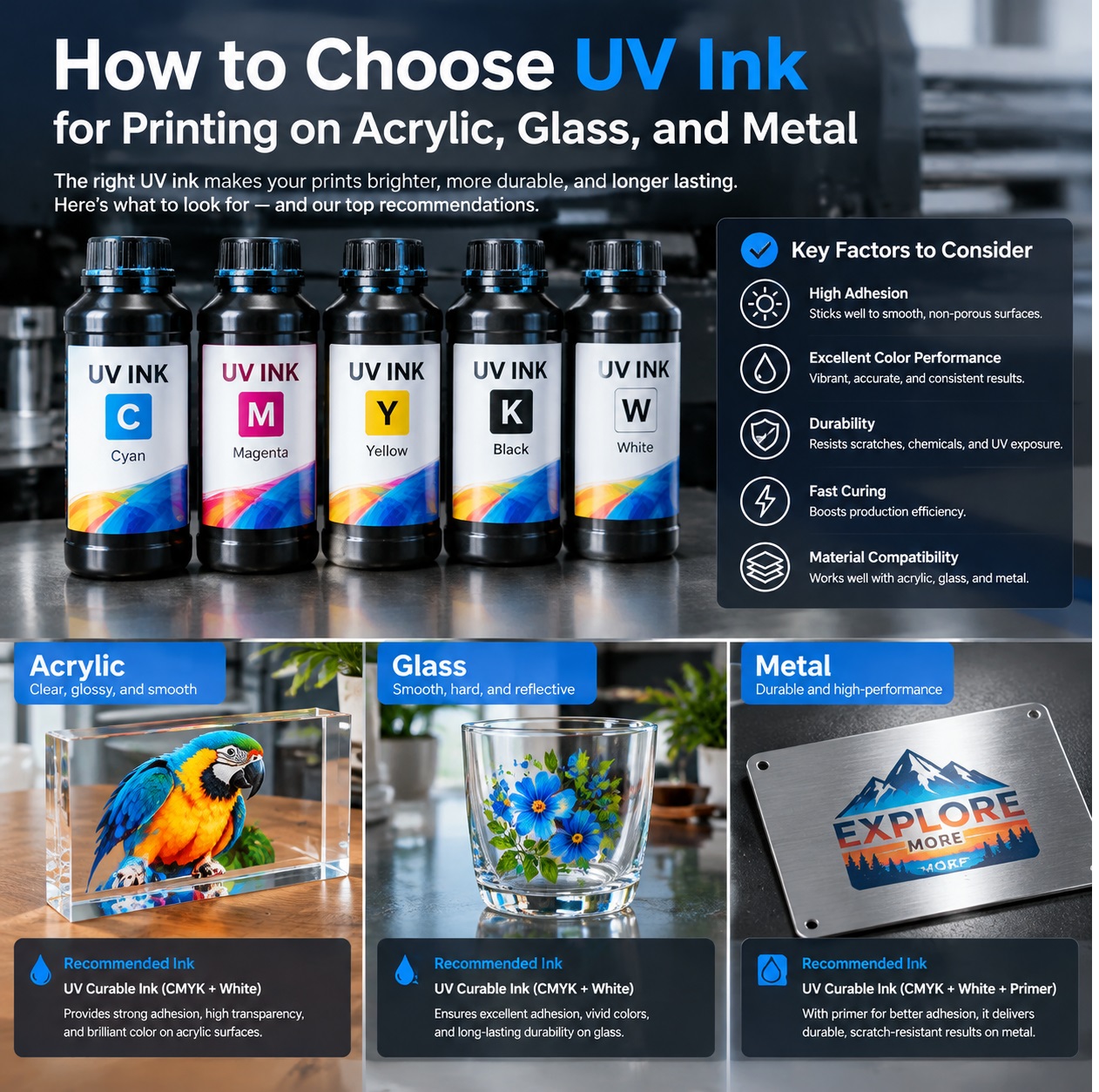
    Buying UV InkAcrylic, glass, and metal don’t care how good your printer is. They care whether the ink sticks, survives a scratch, and still looks sharp after a year in the real world. That is the whole game. If you choose UV ink by color gamut alone, you will eventually ship a beautiful print that flakes off in a customer’s hand.

    The first mistake is treating these three substrates as one family. They are not. Acrylic is a plastic that can stress-crack, haze, or attract static. Glass is smooth, non-porous, and often invisible until it shatters. Metal is a chameleon: bare aluminum, brushed stainless, powder-coated steel, and oily galvanized sheet all behave differently. Your UV ink has to match the actual surface, not the label on the box.

    Start with adhesion. For acrylic, you need an ink that bites without softening the sheet. Aggressive solvents are not the answer because UV ink should be 100 percent solids and cure fast. Look for a formulation that passes a cross-hatch tape test after full cure, not five minutes after the lamp. For glass, adhesion is often about surface energy and primer. Some UV inks bond directly to glass, but many need a silane primer or flame treatment to survive washing and handling. For metal, adhesion is a tug-of-war with oils, oxides, and coatings. If the metal is oily, no ink will save you. Clean it, pretreat it, then choose an ink with the right monomer package for the alloy.

    Curing is next. Acrylic and glass are heat-sensitive. They can warp, crack, or develop stress lines if the UV lamp throws too much infrared. LED UV curing runs cooler and is often the smarter choice for thin acrylic and decorative glass. Metal is more forgiving with heat, but it can reflect UV light and cause undercure at the edges. If you print on curved metal or reflective surfaces, test the cure at the shadowed areas, not just the center of the print.

    Durability separates a sample from a sale. Indoor signage on acrylic may only need scratch resistance and colorfastness. Outdoor glass bottles, architectural panels, or metal machine tags need water resistance, chemical resistance, and abrasion resistance. Ask for test data: rub resistance, adhesion after humidity, solvent wipe, and UV weathering. A supplier who only sends a color chart is not a partner. A supplier who sends a cure schedule and a failure report is.

    Ink type matters too. There is no single UV ink for all three. Flexible acrylics may need a flexible ink to avoid cracking when the sheet is thermoformed or cut. Rigid glass often does better with a hard, glossy ink that resists detergents. Metal may need a formulation with corrosion inhibitors or a primer system for powder-coated surfaces. If you print on multiple substrates in one shop, you can either stock different inks or find a hybrid that compromises. Hybrids are convenient, but they rarely win a performance contest. Know where you can compromise and where you cannot.

    Color and finish are the fun part, but they should not drive the decision alone. Acrylic prints often look best with a clean, high-opacity white backing. Glass needs white ink that hides the substrate or a translucent ink that uses it. Metal can handle metallic effects, but the ink’s opacity and gloss will change how the metal shines through. Check the ink’s surface energy and intercoat adhesion if you print white plus color plus varnish. A beautiful first layer means nothing if the second layer peels.

    Your curing equipment is part of the ink choice. A mercury lamp, a gallium-doped lamp, and an LED lamp do not cure the same chemistry. The ink must match your wavelength, intensity, and line speed. If you buy ink first and then try to force your lamp to cure it, you will waste time, money, and maybe a lot of acrylic. Tell your ink supplier what lamp you run, how many passes, and what ambient temperature your shop reaches in summer.

    Cost per print is the number that matters, not cost per liter. A cheaper ink that needs a primer, extra passes, or a higher scrap rate is expensive. A higher-priced ink that cures in one pass and passes the tape test is cheap. Calculate ink consumption, primer, cleaning, rework, and downtime. Then ask for a trial on your own machine with your own operators. A lab sample cannot replicate your dust, your static, or your Monday morning rush.

    Finally, choose a supplier who understands your market. If you print acrylic displays, glass awards, and metal control panels, you need an ink partner who can recommend different products for different jobs, not one drum for everything. Ask for a sample kit, a cure guide, and a written compatibility matrix. Test acrylic, glass, and metal side by side. Scratch them, wash them, bend them, and leave them in the sun. The ink that survives your test is the one you should buy.

    Acrylic, glass, and metal are unforgiving teachers. They will tell you quickly if you chose the wrong UV ink. Choose based on adhesion, cure, durability, and your actual production line. Then the print will look as good on day 500 as it did on day one. If you are ready to stop guessing, request a substrate-specific UV ink sample kit and a cure audit. That is how you turn a risky print into a repeat order
  • Custom Medical Protective Coveralls: What Hospitals and PPE Distributors Should Consider


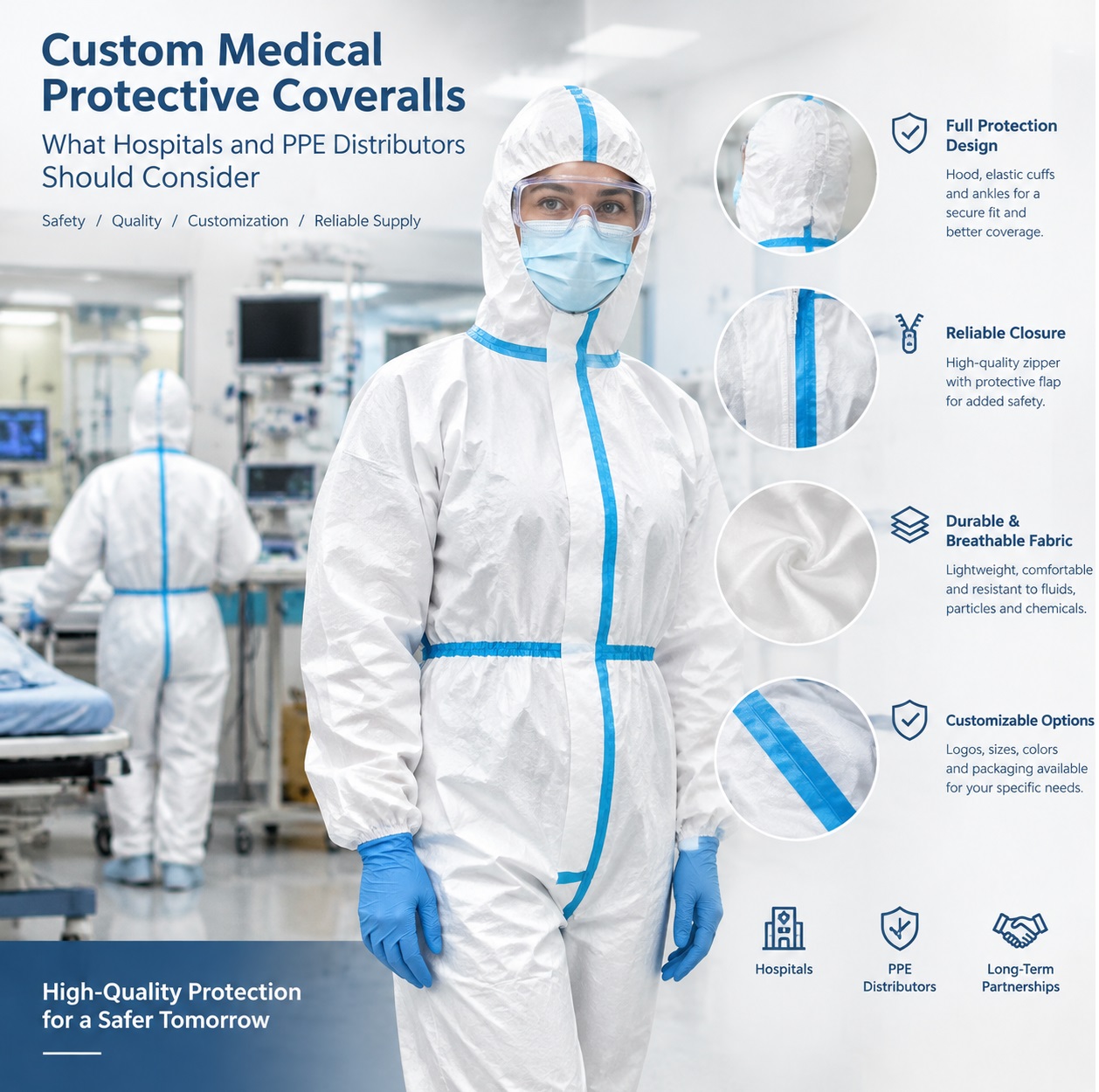
    Chemical Protective Coverall Walk into any hospital procurement office and ask about the last time a coverall order went perfectly. You will get a tired laugh. The gap between what arrives on a pallet and what a nurse actually needs at 3 a.m. in an isolation ward is where money, safety, and reputations get lost. Custom medical protective coveralls exist to close that gap, but only if buyers know what they are actually specifying. Here is what matters before you sign a purchase order.

    Start with the fabric, not the price tag.

    Most sourcing conversations open with cost per unit. That is backwards. The fabric decides everything downstream: breathability, barrier performance, comfort during a twelve-hour shift, and whether the garment passes the standard your facility claims to follow. SMS (spunbond-meltblown-spunbond) is the workhorse for general isolation and low-fluid scenarios. SMMS adds another meltblown layer for better filtration. Microporous film laminates step up fluid resistance for surgery and splash-heavy environments. Then there is the heavy artillery, such as flash-spun polyethylene, reserved for high-risk zones where viral penetration resistance is non-negotiable.

    Ask your supplier for the exact composition, not a vague promise of “high quality material.” If they cannot name the layers and the weight in grams per square meter, keep walking.

    Certification is where cheap coveralls fall apart.

    A coverall can look identical to a certified one and fail every meaningful test. Demand documentation for the standards that apply to your market. In the United States, that usually means ANSI/AAMI PB70 levels for barrier performance, plus ASTM F1670 and F1671 for bloodborne pathogen and viral penetration resistance. In Europe, look for EN 14126 for infective agents and the relevant Type ratings, typically Type 3 and 4 for liquid-tight and spray-tight protection, with Type 5 and 6 covering particle and limited splash risks.

    Certificates should come from accredited labs, and they should match the exact model you are buying. A certificate for a different fabric weight or a discontinued style is worthless. Distributors who resell under their own label carry an extra burden here: they own the liability if the paperwork does not hold up.

    Fit is a clinical issue, not a comfort luxury.

    An ill-fitting coverall gets torn at the shoulder, snagged on a door handle, or left half-zipped because the wearer cannot move properly. That is a breach waiting to happen. Custom sizing programs address this directly. Instead of the standard small-through-XXL spread that fits almost no one well, custom manufacturing lets you adjust torso length, sleeve length, inseam, and hood dimensions.

    Hospitals with diverse staff populations benefit most. A coverall cut for a 175 cm frame hangs dangerously loose on a 160 cm nurse and restricts a 190 cm physician. Distributors can turn this into a genuine selling point: a sizing program that reduces waste from unused sizes and returns from poor fit.

    Seams and closures deserve their own conversation.

    The fabric is only as protective as its weakest stitch. Look at seam construction. Serged seams are fine for basic applications. Bound seams offer more durability. Taped seams, where a heat-sealed strip covers the stitch line, are the standard for liquid-tight and viral barrier requirements. If your clinical environment involves high fluid exposure, taped seams are not optional.

    Then check the zipper and storm flap. A coverall with a flimsy zipper and no flap over it leaks at the front, which is exactly where contamination concentrates. Elastic cuffs, thumb loops, and ankle closures also vary widely. Thumb loops sound trivial until you watch someone’s sleeves ride up mid-procedure.

    Customization goes beyond size.

    Branding matters for distributors. Private-label coveralls with your logo, your size charts, and your packaging build recognition and customer loyalty. Hospitals may want color coding by department or hazard level, which speeds up donning during emergencies. Some buyers request individual poly-bagging for sterile-adjacent environments, while others need bulk-packed cartons for high-volume storage.

    Think through the entire chain: how the product arrives, how it is stored, how it is dispensed, and how it is disposed of. A custom program that ignores any of these stages creates new problems instead of solving old ones.

    Supply chain reliability is the quiet dealbreaker.

    PPE shortages during recent health crises taught everyone a hard lesson. A supplier who cannot guarantee consistent lead times, raw material access, and production capacity is a liability regardless of unit price. Ask about manufacturing locations, backup production lines, and inventory buffer policies. For distributors, ask whether your supplier can hold safety stock for your key accounts.

    Also clarify minimum order quantities early. Custom coveralls usually carry higher MOQs than off-the-shelf products because of tooling and material runs. If your volumes are modest, a good manufacturer will help you find a middle path, such as semi-custom sizing with standard fabric, rather than forcing you into an all-or-nothing commitment.

    The uncomfortable question about cost.

    Custom coveralls cost more per unit than generic imports. That is a fact. But the comparison is incomplete without factoring in waste, returns, worker downtime, and incident risk. A coverall that fits properly and performs as certified reduces the hidden costs that never show up on the invoice. For distributors, a differentiated product line protects margins in a market where commodity coveralls compete almost entirely on price.

    Run the numbers honestly. If your annual volume is low and your risk profile is minimal, standard sizes may be enough. If you operate in high-acuity environments or supply customers who do, custom is not an indulgence. It is risk management.

    Practical steps before you commit.

    Request physical samples in multiple sizes and have actual clinical staff wear them during simulated tasks. Test the donning and doffing process, because a coverall that is hard to remove safely is a design failure. Verify every certificate against the exact model number. Visit or video-audit the production facility if volumes justify it. And put performance guarantees in the contract, not just delivery dates.

    Hospitals and distributors both sit in a market that rewards careful specification and punishes shortcuts. Custom medical protective coveralls give you control over fit, barrier performance, branding, and supply consistency. That control is worth having, provided you ask the right questions before the first order ships rather than after the first complaint arrives.

  • Continuous Safety Education Supports Long Term Workplace Excellence

    Ongoing safety education helps employees maintain valuable knowledge while developing stronger workplace habits over time. Regular learning creates opportunities to refresh essential principles, strengthen practical skills, and encourage confident approaches to daily responsibilities, supporting a positive foundation for long-term workplace excellence.

    Building Strong Safety Knowledge

    Continuous education keeps important safety concepts familiar and accessible. Employees can regularly develop their understanding of responsible work methods while strengthening awareness of tasks, equipment, and workplace expectations.

    • Reinforces essential safety principles
    • Develops stronger awareness of workplace responsibilities
    • Encourages thoughtful approaches to daily activities
    • Builds confidence through regular learning
    • Supports consistent understanding of safe practices

    Encouraging Positive Work Habits

    Reliable habits develop through repetition, guidance, and continued awareness. Safety education helps employees apply positive practices consistently, creating a structured approach to routine responsibilities and encouraging dependable performance.

    • Promotes consistent workplace procedures
    • Encourages careful preparation before tasks
    • Supports organized approaches to daily activities
    • Reinforces responsible working behaviors
    • Helps employees maintain positive safety routines

    Strengthening Practical Skills

    Learning becomes more valuable when employees can connect knowledge with practical workplace activities. Continuous training provides opportunities to develop useful skills and improve confidence when handling routine responsibilities.

    • Improves practical understanding of safety procedures
    • Supports confident equipment interaction
    • Encourages careful task planning
    • Develops stronger observation skills
    • Reinforces responsible workplace practices

    Supporting Effective Communication

    Safety depends on shared awareness and clear communication. Ongoing education encourages employees to exchange useful information, clarify responsibilities, and contribute to a cooperative environment where everyone can participate positively.

    • Promotes clear communication between team members
    • Encourages sharing of relevant safety observations
    • Supports better understanding of responsibilities
    • Strengthens teamwork during daily activities
    • Builds shared commitment to safe practices

    Encouraging Continuous Improvement

    Regular education creates opportunities to identify areas for improvement and strengthen existing practices. Employees can refresh their knowledge while discovering better ways to approach workplace responsibilities with confidence and care.

    • Encourages ongoing development of safety knowledge
    • Supports improvement in established work practices
    • Helps maintain strong workplace awareness
    • Builds confidence through repeated learning
    • Promotes a positive approach to professional development

    Developing Responsible Decision-Making

    Employees encounter different situations throughout their working day. Continuous safety education helps them consider relevant information carefully, understand expectations, and make responsible choices that support organized workplace operations.

    • Encourages thoughtful evaluation of work situations
    • Supports informed and responsible decisions
    • Promotes awareness of task-specific requirements
    • Builds confidence when responding to changing conditions
    • Reinforces careful approaches to workplace activities

    Supporting Long-Term Workplace Excellence

    Sustained learning can contribute to a workplace culture where safety, reliability, and professional growth remain important priorities. Programs such as Machineveiligheid training Haarlem can strengthen knowledge while supporting consistent development and responsible working practices. Continuous safety education brings lasting value by combining knowledge, practical skills, communication, and positive habits. As employees continue learning, they can approach responsibilities with greater confidence and awareness. This ongoing commitment supports organized operations, stronger teamwork, dependable practices, and a workplace environment focused on sustainable excellence and continuous improvement.

  • Radiant Heat Options For Comfortable Indoor Living

    Comfortable indoor temperatures can make every room more inviting during cooler seasons. Radiant heating offers a practical approach by delivering warmth through surfaces within a living space, creating a pleasant environment for everyday activities. With thoughtful planning and professional installation, radiant heat can complement a property’s layout while supporting consistent comfort.

    Benefits Of Radiant Heating

    Radiant systems are designed to distribute warmth in a gentle and balanced way. Instead of relying entirely on moving heated air, these systems can warm floors, walls, or other designated surfaces, helping create an enjoyable indoor atmosphere.

    Key benefits include:

    • Even and comfortable warmth
    • Quiet everyday operation
    • Reduced air movement
    • Cozy floor temperatures
    • Flexible installation options
    • Attractive system integration
    • Comfortable room environments
    • Efficient heat distribution

    These qualities make radiant heating an appealing option for spaces where comfort and a welcoming atmosphere are important.

    Floor Heating For Everyday Enjoyment

    Radiant floor heating can add an especially comfortable touch to frequently used areas. Warm flooring creates a pleasant feeling underfoot while helping distribute heat throughout a room. It can work well in living areas, bedrooms, bathrooms, kitchens, and other spaces where consistent warmth is valued.

    hopkinsville plumber

    Common advantages include:

    • Pleasant warmth underfoot
    • Consistent room comfort
    • Convenient temperature control
    • Clean-looking installation
    • Minimal visible equipment
    • Comfortable morning routines

    A carefully planned system can be selected according to room size, flooring materials, insulation, and household preferences.

    Planning A Comfortable Heating System

    Successful radiant heating begins with understanding the property’s needs. Professional guidance can help determine suitable system placement, heating zones, controls, and supporting components. When plumbing and heating requirements overlap, experienced assistance from a hopkinsville plumber can help coordinate essential connections as part of a complete property comfort plan.

    Flexible Options For Different Spaces

    Radiant heating can be adapted to different interior layouts and lifestyle requirements. Hydronic systems circulate warmed water through designated tubing, while electric systems use heating elements to provide surface warmth. Each approach offers useful possibilities depending on the property, installation goals, and available infrastructure.

    Important planning considerations include:

    • Room dimensions
    • Existing flooring
    • Insulation quality
    • Heating preferences
    • Available system space
    • Individual room requirements
    • Temperature control needs

    Thoughtful planning can help create a heating solution that feels natural and convenient.

    Long-Term Indoor Comfort

    Radiant heating can become an important part of a comfortable indoor environment. Consistent warmth, quiet operation, and flexible design make it suitable for many modern living spaces. Regular professional attention can also help maintain system performance and support dependable seasonal operation.

    With the right combination of planning, installation, and maintenance, radiant heat can provide lasting comfort while complementing the overall feel of a property. From warm floors to balanced room temperatures, these solutions offer a welcoming way to enjoy comfortable indoor living throughout cooler periods.

  • Full Roof Replacement Services Create Stronger Long Term Protection

    A complete roof replacement can provide a valuable opportunity to strengthen a building’s protection, improve comfort, and refresh its overall appearance. When an aging roofing system is replaced with carefully selected materials and professional installation, the result can be a dependable surface designed to support long-term performance and everyday peace of mind.

    Strong Materials Build Reliable Protection

    A full replacement allows every layer of the roofing system to be evaluated and improved. Durable materials can create a stronger protective barrier while supporting consistent performance through changing outdoor conditions.

    • Quality roofing materials provide dependable overhead coverage.
    • Reinforced layers can improve overall roof strength.
    • Weather-resistant surfaces support lasting durability.
    • Strong components contribute to structural protection.
    • Carefully selected materials can enhance appearance.

    Professional Installation Supports Performance

    Proper installation is essential for achieving reliable results from a new roof. Skilled workmanship helps ensure that roofing materials, seams, edges, flashing, and protective layers are carefully fitted for dependable performance.

    • Accurate measurements support precise material placement.
    • Secure fastening helps maintain structural stability.
    • Carefully sealed areas support moisture protection.
    • Properly installed flashing protects vulnerable points.
    • Professional workmanship encourages lasting reliability.

    Improved Drainage Protects The Roof

    Roofing Contractors

    A replacement project provides an opportunity to improve water management across the roofing system. Effective drainage helps move rainwater away from the surface and surrounding structural areas, supporting long-term roof performance.

    • Proper slopes encourage efficient water runoff.
    • Durable gutters help direct water away from walls.
    • Downspouts support controlled water discharge.
    • Clear drainage routes help maintain roof condition.
    • Well-planned systems support consistent moisture management.

    Insulation Enhances Indoor Comfort

    A new roofing system can incorporate suitable insulation and ventilation features that contribute to a more comfortable interior. These improvements can help manage heat transfer and support more consistent indoor temperatures.

    • Insulation can improve temperature stability.
    • Ventilation supports healthy air circulation.
    • Suitable materials can reduce unwanted heat transfer.
    • Comfortable interiors support enjoyable daily living.
    • Efficient roofing layers can contribute to energy-conscious performance.

    A Fresh Roof Improves Exterior Appeal

    Roof replacement can refresh the appearance of an entire property. Modern roofing materials offer attractive profiles, textures, and finishes that can complement architectural features while providing dependable protection.

    • New surfaces create a clean visual appearance.
    • Coordinated materials complement exterior design.
    • Fresh finishes can enhance overall presentation.
    • Updated roofing contributes to a well-maintained appearance.
    • Attractive designs can support lasting curb appeal.

    Regular Care Preserves New Roofing

    After replacement, consistent maintenance can help preserve the roofing system and its protective qualities. Routine inspections and timely attention to maintenance needs support reliable performance throughout the roof’s service life.

    • Regular inspections help monitor roof condition.
    • Drainage checks support efficient water flow.
    • Surface cleaning helps maintain appearance.
    • Seal inspections support moisture resistance.
    • Preventive care encourages long-term durability.

    Creating Lasting Roofing Confidence

    A full roof replacement brings together durable materials, professional installation, effective drainage, improved comfort, and attractive design. Click Here for additional information about roofing considerations and replacement solutions. With thoughtful planning and consistent maintenance, a new roofing system can provide stronger protection, dependable performance, and lasting value for years to come.

  • Budget Considerations before Investing In Personal Watercraft Docking

    Planning a personal watercraft docking investment becomes easier when the budget accounts for more than the initial equipment cost. A well-organized approach considers the dock size, watercraft specifications, installation requirements, accessories, and future maintenance. Reviewing these elements in advance can create a practical foundation for a convenient and lasting docking solution.

    Start With Watercraft Requirements

    The size and weight of a personal watercraft influence the type and capacity of docking arrangement required. A suitable system should provide dependable support while allowing smooth launching and retrieval.

    • Check the watercraft length and width
    • Confirm the overall weight and load requirements
    • Consider hull shape and support points
    • Allow sufficient room for comfortable movement
    • Plan for any future watercraft upgrades

    Understand the Main Cost Components

    A complete budget should include every part needed to create a functional docking setup. Pricing can vary according to configuration, size, accessories, and installation requirements.

    Important budget categories include:

    • Main docking components
    • Connection hardware
    • Support and stabilization equipment
    • Launching and boarding accessories
    • Anchoring equipment
    • Delivery and transportation
    • Installation or assembly
    • Routine maintenance

    Reviewing these categories together makes it easier to develop a realistic spending plan.

    Consider Dock Configuration

    Different layouts can provide different levels of access, flexibility, and storage capacity. A compact arrangement may suit a single watercraft, while a larger configuration can accommodate additional equipment and movement areas.

    A thoughtful configuration can help control unnecessary spending while maintaining useful functionality. Comparing dimensions, access points, and expansion possibilities can also make the investment more adaptable over time.

    Plan For Installation

    Installation requirements can influence the overall project budget. Water depth, dock positioning, anchoring needs, and assembly complexity should be considered before purchasing components.

    A practical preparation checklist includes:

    • Review water depth
    • Assess shoreline access
    • Identify anchoring requirements
    • Confirm available installation space
    • Estimate assembly time
    • Include professional assistance when appropriate

    Compare Complete System Costs

    Looking only at the base equipment price may not provide a complete financial picture. A detailed quote should explain the components, accessories, transportation, installation, and other necessary additions. This approach helps maintain transparency and supports better budget planning.

    For additional pricing research, reviewing https://www.hiseadock.com/jet-dock-prices-search/ can help when examining factors that contribute to docking system costs.

    Think About Long-Term Value

    A well-planned docking investment can support convenient watercraft storage, smoother launching, and organized waterfront use. Durable materials and appropriate support can also help reduce avoidable maintenance needs.

    Consider these long-term factors:

    • Expected service life
    • Cleaning requirements
    • Replacement components
    • Seasonal storage needs
    • Expansion opportunities
    • Ease of routine inspections

    Create A Flexible Budget

    Leaving room for accessories, installation adjustments, and future improvements can make the investment more comfortable. A flexible budget allows the docking system to meet current requirements while remaining useful as needs change.

    Careful planning, clear specifications, and complete cost comparison can turn a personal watercraft docking project into a practical investment with lasting convenience and dependable everyday usability.

  • Exploring Dessert Portions through Different Ice Cream Cup Sizes

    Dessert presentation becomes more enjoyable when serving portions match individual preferences and occasions. Ice cream cups provide a convenient way to organize sweet treats, maintain attractive presentations, and create memorable dessert experiences. Selecting suitable cup sizes helps balance portion control, visual appeal, and serving convenience. From small individual treats to generous dessert combinations, different capacities support creative serving ideas while making preparation more organized and enjoyable.

    Understanding Different Ice Cream Cup Capacities

    Choosing appropriate cup capacities allows dessert creators to accommodate different appetites and serving requirements. Each size offers opportunities to present ice cream attractively while ensuring guests receive satisfying portions.

    Understanding ice cream cup sizes  helps simplify portion planning and encourages thoughtful dessert presentation.

    • Small cups are suitable for tasting portions, miniature desserts, and small sweet treats.
    • Medium cups provide balanced servings for everyday enjoyment and individual dessert breaks.
    • Large cups accommodate generous scoops, layered combinations, and additional toppings.
    • Extra spacious cups offer flexibility for elaborate dessert creations with multiple ingredients.
    • Consistent cup capacities help maintain uniform servings and organized preparation routines.

    Matching Portions With Dessert Preferences

    Different dessert occasions encourage different serving approaches. Selecting suitable containers helps create enjoyable experiences while accommodating individual preferences, whether guests appreciate simple scoops or creatively layered combinations.

    Thoughtful portion selection also supports attractive presentation and convenient distribution during gatherings.

    • Individual servings make it easier for guests to enjoy their preferred quantities.
    • Smaller portions encourage sampling several flavors during dessert occasions.
    • Medium servings accommodate classic combinations featuring two complementary scoops.
    • Larger portions provide room for sauces, fruit pieces, and crunchy toppings.
    • Carefully measured quantities create consistency across multiple dessert servings.

    Creating Attractive and Creative Dessert Presentations

    Cup sizes contribute to the overall appearance of ice cream desserts. A suitable container provides enough room for ingredients while allowing each layer, topping, and decorative element to remain visually appealing.

    Creative arrangements transform simple frozen treats into delightful presentations that encourage enjoyment.

    • Transparent cups showcase colorful layers and appealing ingredient combinations.
    • Wider openings make adding scoops, sprinkles, and decorative toppings convenient.
    • Deeper containers accommodate layered desserts with sauces and complementary textures.
    • Smaller cups highlight miniature creations with carefully arranged decorative details.
    • Coordinated portion sizes help create visually consistent dessert displays.

    Improving Convenience Through Portion Planning

    Organized portion planning makes dessert preparation smoother and more efficient. Choosing suitable cup capacities beforehand helps simplify ingredient measurements, serving arrangements, and storage considerations while supporting a pleasant experience for everyone.

    Practical preparation methods also encourage flexibility when accommodating different serving preferences in https://www.yoonpak.com/ice-cream-cup-sizes-explained/.

    • Prepare several cup sizes to accommodate varied appetites and dessert combinations.
    • Estimate ingredient quantities according to the intended serving capacity.
    • Arrange cups in advance to simplify distribution during busy occasions.
    • Select sturdy containers that support comfortable handling and serving.
    • Maintain consistent portions to encourage efficient preparation and attractive presentation.

    Making Every Dessert Serving Enjoyable

    Exploring different ice cream cup sizes creates opportunities to personalize dessert experiences through thoughtful portions and appealing arrangements. From modest servings to elaborate creations, suitable containers support creativity, convenience, and presentation.

    Understanding serving capacities helps transform ordinary dessert preparation into an enjoyable activity. By considering portion preferences, ingredient combinations, and presentation requirements, dessert creators can offer satisfying treats that suit different occasions. Carefully selected cups make every serving feel organized, inviting, and memorable while allowing the delicious flavors of ice cream to remain the highlight of every dessert experience.

  • Personalized Buildings Reflect Individual Needs Through Thoughtful Design Choices

    Personalized buildings offer an opportunity to create spaces that closely match individual lifestyles, practical requirements, and creative preferences. Thoughtful design choices can influence how a building looks, feels, and functions, transforming a simple structure into a purposeful environment. From layouts and storage to lighting and finishes, every detail can contribute to a more satisfying experience.

    Flexible Layouts Support Different Purposes

    A personalized building can be planned around its intended use rather than relying on a fixed arrangement. Flexible layouts make it easier to create dedicated areas for storage, hobbies, work, recreation, or multiple activities within one structure.

    • Open layouts provide adaptable working areas.
    • Dedicated zones keep different activities organized.
    • Flexible floor plans support changing requirements.
    • Spacious interiors improve freedom of movement.
    • Purposeful layouts make everyday tasks more efficient.

    Customized Storage Improves Organization

    Storage requirements vary depending on the items a person needs to keep accessible. Tailored storage features can make better use of available space while keeping tools, equipment, supplies, and personal belongings neatly arranged.

    • Built-in shelving maximizes usable wall space.
    • Cabinets provide convenient enclosed storage.
    • Wall hooks keep frequently used items accessible.
    • Overhead compartments utilize higher areas effectively.
    • Adjustable storage accommodates different item sizes.

    Personalized Features Enhance Comfort

    Comfort-focused details can turn a practical building into a welcoming space. Natural light, ventilation, insulation, and convenient access can be selected according to the intended activities and preferred atmosphere.

    • Windows introduce natural brightness.
    • Ventilation supports comfortable airflow.
    • Insulation can improve interior temperature stability.
    • Accessible doors simplify everyday movement.
    • Comfortable interiors encourage longer, more enjoyable use.

    Exterior Choices Create Individual Character

    The exterior can reflect personal preferences through carefully selected colors, textures, roofing styles, doors, and architectural details. A cohesive exterior design can create an attractive structure that complements its surroundings.

    • Exterior finishes create distinctive visual appeal.
    • Roofing choices influence overall character.
    • Door styles can add practical elegance.
    • Window placement can enhance the exterior design.
    • Decorative details provide opportunities for personalization.

    Functional Design Supports Everyday Activities

    Thoughtful planning ensures that visual preferences are supported by practical performance. Features can be selected according to how the building will be used, helping create an efficient environment for regular activities.

    • Workbenches provide dedicated project areas.
    • Wide entrances simplify equipment movement.
    • Durable flooring supports frequent activity.
    • Electrical planning can accommodate useful equipment.
    • Well-positioned lighting improves task visibility.

    Designs Can Adapt Over Time

    Personal needs can change, making flexibility an important part of thoughtful building design. A versatile structure can accommodate new hobbies, additional storage, evolving work requirements, or different household activities.

    • Modular storage can be rearranged as needed.
    • Open areas allow future changes.
    • Multipurpose rooms support varied activities.
    • Adjustable features make spaces easier to update.
    • Flexible designs encourage long-term usefulness.

    Creating A Truly Personal Space

    Personalized buildings combine practical planning with individual expression. When exploring Alberta sheds, considering layout, storage, comfort, exterior character, and future adaptability can help create a structure that feels purposeful and distinctive. Thoughtful design choices ensure that every feature contributes to a space that supports everyday needs while offering lasting comfort, organization, and enjoyment.

  • Practical Considerations For Achieving Balanced Printing Results

    Flexographic printing depends on a careful balance between ink flow, substrate behavior, anilox selection, press speed, and drying conditions. Among these variables, viscosity has a direct role in how smoothly ink transfers and how consistently color develops. Understanding the https://www.ketegroup.com/flexo-ink-viscosity-range/ can help operators establish practical targets for different ink systems while supporting clean, uniform results.

    Understanding Viscosity In Flexographic Printing

    Ink viscosity describes resistance to flow. A suitable level helps ink move efficiently through the ink chamber and anilox cells before reaching the plate and substrate. Different formulations require different operating conditions, so one fixed value cannot suit every application. Water-based, solvent-based, UV-curable, and high-solids inks may each have distinct viscosity characteristics.

    Useful considerations include:

    • Ink chemistry and solids concentration
    • Substrate type and surface characteristics
    • Anilox cell volume and printing speed
    • Drying capacity and press temperature
    • Measurement method and equipment consistency

    Selecting A Practical Operating Range

    A balanced approach begins with establishing an approved viscosity window through press trials. General reference ranges can provide a starting point, but the final target should reflect the specific ink, substrate, equipment, and desired print appearance. For example, commonly cited reference values place water-based systems around 18–25 seconds with a Zahn Cup #2, while solvent-based systems may fall around 20–30 seconds. UV-curable formulations can operate at higher viscosity levels.

    Rather than adjusting viscosity based on a single reading, printers can evaluate:

    • Color density and consistency
    • Fine detail and dot reproduction
    • Ink coverage and smoothness
    • Drying performance
    • Repeatability throughout the production run

    Managing Temperature And Ink Changes

    Temperature can noticeably influence ink viscosity. As ink becomes warmer, it generally flows more easily, while cooler conditions can increase viscosity. Solvent or water evaporation during production can also raise viscosity as the concentration of solids increases. Maintaining stable measurement conditions and recording temperature alongside viscosity readings supports more dependable process control.

    Regular checks can help operators recognize gradual changes before they affect the printed result. Consistent sampling techniques are equally important because readings can vary when measurement conditions are inconsistent.

    Building Consistency Into Daily Production

    A practical viscosity-control routine can strengthen overall printing performance. Operators can document the approved range, measurement method, ink temperature, substrate, anilox specification, and press conditions for each recurring job. This creates a reliable reference for future production and reduces unnecessary adjustments.

    Balanced printing is achieved through coordinated process control rather than viscosity alone. When viscosity is monitored alongside temperature, ink formulation, press speed, anilox characteristics, and substrate behavior, flexographic operations can achieve stable color, smooth coverage, sharp details, and efficient production. This structured approach supports repeatable quality and encourages confident day-to-day press performance.

  • Modern Grooming Environments Benefit From Functional Styling Stations

    A thoughtfully designed grooming environment can make daily services more comfortable, organized, and enjoyable. Functional styling areas combine practical features with attractive presentation, helping professionals work efficiently while giving clients a welcoming setting for their grooming appointments.

    Efficient Layouts Support Smooth Services

    A well-planned workspace allows essential tools, accessories, and equipment to remain conveniently positioned. This practical arrangement helps professionals move naturally through each service while keeping the surrounding area neat and accessible.

    • Convenient layouts reduce unnecessary movement during services.
    • Accessible tools help professionals maintain smooth routines.
    • Open working areas provide comfortable movement around stations.
    • Organized surfaces create a clean and polished appearance.
    • Practical arrangements support consistent service preparation.

    Comfortable Spaces Improve Client Experiences

    Comfort can make a meaningful difference during grooming appointments. Supportive seating, suitable positioning, and enough personal space help clients relax while professionals focus on providing attentive and enjoyable services.

    • Supportive seating encourages a relaxed experience.
    • Appropriate positioning promotes comfortable grooming sessions.
    • Generous spacing creates a pleasant sense of openness.
    • Comfortable surroundings help clients feel welcomed.
    • Thoughtful layouts make appointments more enjoyable.

    Attractive Design Creates A Polished Environment

    Salon Station

    Visual appeal contributes to the overall character of a grooming space. Coordinated furnishings, balanced layouts, and refined details can create an inviting atmosphere that feels modern, professional, and pleasant.

    • Contemporary styling adds a fresh visual impression.
    • Coordinated finishes create a harmonious appearance.
    • Well-positioned mirrors improve both function and presentation.
    • Refined details contribute to an elegant environment.
    • Balanced arrangements make the space feel organized.

    Smart Organization Encourages Productivity

    Effective storage and organization help professionals maintain a clear working environment. A Salon Station designed with practical storage can keep frequently needed items close at hand while supporting an efficient daily workflow.

    • Dedicated storage keeps essential supplies organized.
    • Drawers provide convenient spaces for smaller accessories.
    • Shelving keeps frequently used items easy to reach.
    • Clear countertops create a comfortable working surface.
    • Organized tools help simplify service preparation.

    Durable Features Support Daily Convenience

    Functional styling furniture should combine attractive design with dependable everyday use. Easy-care surfaces, sturdy construction, and thoughtful features can help maintain a welcoming environment while making routine upkeep more manageable.

    • Durable surfaces support regular daily activities.
    • Easy-care finishes make cleaning more convenient.
    • Stable construction encourages confident professional use.
    • Practical features support long-term workspace organization.
    • Quality materials help preserve a polished appearance.

    Thoughtful Details Complete The Experience

    Small design choices can improve both functionality and atmosphere. Lighting, spacing, storage, and accessibility can work together to create a grooming environment where professionals feel prepared and clients feel comfortable throughout their appointments.

    • Balanced lighting supports clear and comfortable work.
    • Accessible features make daily tasks easier.
    • Suitable spacing encourages smooth movement.
    • Coordinated elements create visual consistency.
    • Thoughtful details contribute to a welcoming atmosphere.

    Building Better Grooming Workspaces

    Functional styling environments bring together comfort, organization, efficiency, and attractive design. With careful planning, every area can support smoother services and create positive experiences, helping grooming spaces remain inviting, practical, and enjoyable throughout the day.